Image Credibility After Generative AI—How the Erosion of Presumptive Trust Reconfigured the Epistemic Conditions of Visual Media Interpretation
Generative AI has accelerated the dismantling of presumptive trust in visual media. As fabrication costs have fallen below verification costs, audiences have shifted from passive acceptance to hypercritical forensic scrutiny. This marks a profound reordering of image perception in the digital age.
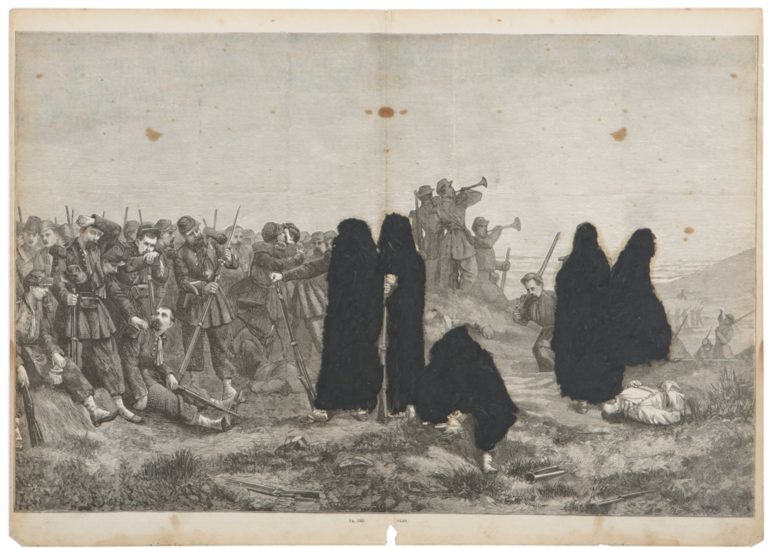
Generative artificial intelligence has illuminated a transition long underway in the epistemic conditions surrounding visual media. The environment has moved from one of presumptive credibility to one in which audiences routinely require procedural verification before granting interpretive attention. The core mechanism driving this is straightforward: the cost of fabricating a credible image has fallen below the cost of verifying one. When fabrication becomes cheaper than verification, trust necessarily migrates from appearance toward documented process. This dynamic—more than any single technology—drives the broader passage from high-trust epistemic cultures to verification-intensive ones. Its implications reach far beyond generative AI to the basic mechanisms by which visual evidence acquires and retains authority.
The Erosion of Presumptive Trust
Longitudinal data reveal a sustained contraction of institutional confidence. Gallup polling documents American trust in mass media declining from peaks near seventy percent in the 1970s to a record low of twenty-eight percent in 2025. The Edelman Trust Barometer charts parallel declines across government, business, and media, accompanied by polarization and a reorientation toward localized sources. The Reuters Institute Digital News Report places global trust in news at historic lows (thirty-seven percent in 2026 globally, twenty-five percent in the US), with even lower confidence for platform-mediated content. These figures describe the climate in which images now circulate: an environment in which default acceptance has grown costly.
Photography & the Historical Presumption of Authenticity
Photography entered public life with a powerful implicit claim to evidentiary value. Benjamin examined the detachment of the image from aura through mechanical reproduction. Barthes differentiated the studium of cultural interest from the punctum of direct encounter. Sontag explored the medium as both a form of knowledge and appropriation. Sekula situated photographic practice within institutional relations of documentation and power. Batchen recovered the early technical and discursive conditions in which photography asserted truth claims even while permitting manipulation.
The operative assumption held that the photograph bore a direct indexical relation to what had stood before the lens. The burden of proof rested primarily with the producer and the institutions—newsrooms, archives, courts, galleries—that vouched for it. This settlement of presumptive trust persisted because the cost and technical barriers to credible fabrication remained high relative to verification.
The Redistribution of Evidentiary Responsibility
Contemporary systems have broadened participation in authentication. The labor of verification, once concentrated among professional gatekeepers, now occurs at every level of engagement. Viewers routinely examine metadata, conduct reverse-image searches, inspect for forensic artifacts, and demand disclosure.
Crucially, this redistribution of authentication has occurred without a corresponding redistribution of evidentiary access. Contemporary audiences increasingly evaluate authenticity while lacking the original files, production records, provenance documentation, or institutional resources historically associated with evidentiary assessment. The consequence is not merely broader participation in verification, but the normalization of authentication under conditions of incomplete evidence. This creates new frictions, epistemic burdens, and opportunities for both genuine scrutiny and performative or erroneous judgment.
The Cognitive Reorientation of Looking
This environment has fostered distinctive viewing strategies. Attention frequently turns first to indicators of production: metadata, watermarks, disclosure labels, and telltale artifacts of synthesis. Only afterward does engagement proceed to questions of composition or meaning. This reordering of attention is cognitive in nature. What was once settled upstream by institutions is now an obligatory first step for the viewer. Attention devoted to authentication is attention unavailable for deeper interpretation—progressively deferring aesthetic, symbolic, and historical engagement.
The Social Conditions of Hypervigilance
The contemporary culture of verification extends beyond developments in visual media alone. It has emerged within a broader historical environment characterized by declining institutional confidence, successive revisions to official guidance, contradictory expert communication, and prolonged conditions of informational uncertainty. Under these circumstances, verification increasingly assumes the character of a default cognitive orientation rather than an exceptional evidentiary practice. The routine interrogation of images, metadata, provenance, and production methods reflects a broader recalibration of how credibility is allocated. What appears as heightened forensic literacy simultaneously reveals a deeper transformation: institutional confidence no longer precedes scrutiny; scrutiny increasingly precedes confidence. Generative artificial intelligence rendered the underlying epistemic structure unmistakably visible.
The Positional Economy of Verification
Verification practices also operate within economies of recognition. Bourdieu’s analysis of symbolic capital illuminates how the demonstration of discernment can generate status. Identifying synthetic elements, demanding disclosure, or correctly interpreting provenance markers assesses credibility while offering opportunities for social differentiation. When a practice becomes structurally necessary, an economy of distinction forms around the performance of it.
Institutional & Commercial Responses
Institutional responses illustrate the transition. Christie’s inaugural dedicated auction of AI-generated works, Augmented Intelligence, conducted in early 2025, exceeded estimates and attracted younger participants while prompting discussion of authorship and provenance. Getty Images has developed generative tools trained on licensed content alongside legal measures to protect its archive. Reuters integrates assistive systems under policies that emphasize human oversight and appropriate disclosure. Technical standards such as Content Credentials (C2PA)—cryptographic metadata infrastructure designed to embed verifiable provenance information—embed machine-readable provenance metadata, with adoption advancing among manufacturers and platforms. Regulatory measures, including provisions under the European Union Artificial Intelligence Act and Chinese labeling requirements for synthetic content, formalize disclosure obligations. The United States Copyright Office has clarified practices for works incorporating AI-generated elements while maintaining the centrality of human authorship.
A further observation from commercial visual culture: across promotional imagery for consumer brands, a substantial portion of public commentary now focuses on production methods and potential synthetic origins rather than on design, cultural reference, or aesthetic intent. This migration of attention from representation to provenance has traveled well beyond the precincts of news and evidence.
Discussion
Audiences increasingly direct cognitive resources toward verification of provenance before deeper engagement with images. Generative AI did not create the underlying erosion of institutional trust—that crisis had been building for decades through polarization, declining confidence in legacy institutions, and earlier waves of media manipulation. Instead, generative systems collided with this pre-existing condition and drastically accelerated it. The interplay of long-term declining presumptive trust and the shifted economics of fabrication and verification has reordered the sequence of image reception: audiences now authenticate before they interpret. The deeper movement concerns the reorganization of perception itself—from presumptive credibility to demonstrated provenance. Technical standards, regulatory frameworks, and platform mechanisms represent orderly adaptations to a demand audiences have already formed.
This line of inquiry opens into a larger research program for the Foundation: the erosion of presumptive trust as foundational condition; the economics of fabrication versus verification as core mechanism; authentication as social practice; and the implications for negotiated authenticity in archives, art markets, law, and cultural transmission. The value lies in offering clear conceptual language that others can cite, test, extend, or critique—presumptive trust, the fabrication-verification cost dynamic, and redistributed evidentiary responsibility.
Conclusion
Generative artificial intelligence has accelerated an epistemic transition whose foundations were already established. The erosion of presumptive trust and the economics of fabrication versus verification created the conditions under which procedural verification became a standard precondition for image reception. The redistribution of the labor of verification alters more than the interpretation of images; it reorganizes the social conditions under which credibility is established. What changed was not primarily the image, but the conditions under which credibility is extended to it. The contemporary image increasingly arrives not as an object awaiting interpretation, but as a claim awaiting authentication. What is already evident is that the sequence of seeing has changed.
This publication is part of the Erik Brunetti Foundation for the Arts' continuing research into the evolving relationship between image-making technologies, visual credibility, archival practice, and the preservation of the cultural record. The Foundation's white papers develop original conceptual frameworks intended to support scholarship and stimulate interdisciplinary discussion across museums, archives, publishing, law, journalism, and contemporary visual culture.