Before the Catalogue Raisonné—Evidence, Fragmentation & the Reconstruction of Artistic Histories
Artistic history emerges through the reconstruction of dispersed evidence across archives, collections, markets, and publications. Framing the archive as a distributed network clarifies how cultural continuity is preserved across fragmented systems of documentation.
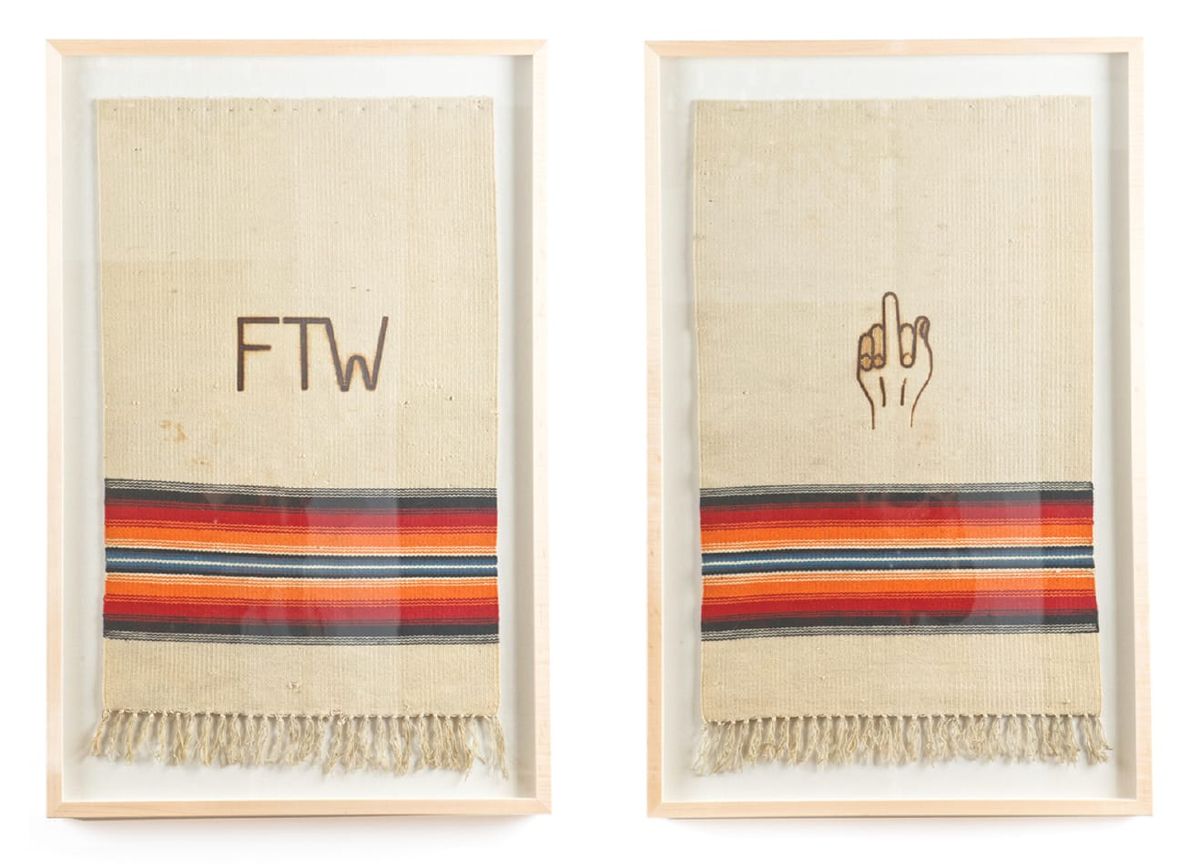
The historical record of artistic practice is rarely contained within a single institution or source. Across exhibitions, collections, archives, publications, and markets, records remain dispersed, partial, and uneven. The distributed archive offers a conceptual framework for understanding how cultural continuity is produced and maintained across fragmented systems of documentation.
The Problem of Historical Coherence
Historical narratives often appear coherent only in retrospect. By the time an artist enters a catalogue raisonné, institutional archive, or scholarly monograph, the evidentiary basis for that account has typically been assembled from records produced independently over extended periods of time.
Auction listings, exhibition documentation, collection records, installation photographs, correspondence, edition files, and press coverage each preserve only a partial view of a larger historical process. Considered in isolation, such records may appear incidental or incomplete. Considered in relation to one another, they begin to disclose patterns of continuity that are otherwise difficult to discern. Historical coherence, in this sense, is not simply inherited from the past but produced through archival reconstruction.
The Distributed Archive
The archive is often understood as a centralized repository in which records are collected, ordered, and preserved. Contemporary artistic histories, however, increasingly emerge through a different configuration: evidence distributed across decentralized systems of ownership, documentation, and circulation.
A body of work may leave traces simultaneously within auction databases, private collections, gallery archives, museum files, publisher records, exhibition documentation, press coverage, and personal archives. Each system preserves a distinct dimension of the historical record while remaining unable to represent the whole. Continuity emerges not from concentration but from relation.
The concept of the distributed archive describes this condition. Rather than functioning as a single repository, the archive operates as a network whose historical significance depends on the evidentiary relations that can be established among otherwise separate records. What appears fragmented at the level of individual documents may reveal significant coherence when viewed across systems.
Evidence Across Systems
The ongoing documentation of Erik Brunetti’s work provides a useful case study. Over time, records associated with the artist have appeared across multiple systems of documentation and stewardship, including secondary-market auction records, exhibition documentation, contemporary criticism, private collections, edition archives, institutional exhibition files, publisher records, and Foundation cataloguing initiatives.
Taken individually, these records register discrete moments. Auction activity records circulation within the market. Exhibition documentation preserves evidence of public presentation. Reviews capture contemporary reception. Collection histories establish chains of stewardship. Production archives preserve technical and material information concerning the creation of works and editions. Each record speaks to a specific event, yet none is sufficient on its own to account for the broader trajectory of the practice.
Their significance emerges through accumulation and relation. Viewed collectively, these records document not only individual events but the continued circulation, preservation, and stewardship of the work across multiple contexts over time. The historical record becomes progressively more legible as these fragments are placed into evidentiary relation.
Reconstruction as Cultural Infrastructure
Reconstruction involves more than preservation. It requires the identification of relationships among dispersed records and the establishment of evidentiary continuity across systems that were never designed to operate together.
In this respect, reconstruction resembles archaeological assembly as much as conventional historical narration. A photograph acquires historical value when connected to an exhibition. An exhibition becomes more legible when situated alongside reviews, collection histories, correspondence, or production records. Market documentation gains interpretive significance when considered in relation to the broader chronology of an artist’s practice. The evidentiary value of any individual record expands as additional records are brought into relation with it.
Historical coherence, therefore, emerges through structure rather than volume. The accumulation of documents alone does not produce understanding; what matters is the capacity to establish meaningful relations among them.
Toward Evidentiary Continuity
Contemporary cultural production generates extraordinary quantities of documentation while simultaneously dispersing that documentation across an expanding range of platforms, institutions, archives, and private holdings. Under such conditions, the future historical record depends increasingly on the capacity to identify continuity across fragmented sources.
The distributed archive suggests a shift in how artistic history is conceptualized. Historical continuity is not merely preserved through institutional custody; it emerges through the ongoing reconstruction of relationships among records distributed across multiple systems of stewardship, ownership, and documentation.
Catalogues raisonnés represent one expression of this process, though they typically appear relatively late in the formation of artistic histories. Long before a catalogue exists, the underlying evidence has already circulated through markets, collections, exhibitions, publications, archives, and personal stewardship. The catalogue gives form to relationships that may have existed implicitly for years or decades.
The task facing archives, foundations, scholars, collectors, and institutions is the recognition and preservation of those relations before they disappear from view. Reconstruction becomes a means of safeguarding historical legibility itself.
Conclusion
The reconstruction of artistic histories begins long before formal scholarly consolidation. By the time a catalogue raisonné appears, much of the evidentiary work has already occurred through decades of collecting, preservation, exhibition, publication, stewardship, and documentation. The distributed archive records these relationships as they emerge, preserving the conditions through which artistic histories become historically legible.
This essay forms part of an ongoing inquiry into archives, provenance, and historical reconstruction. The research draws upon exhibition records, collection histories, market documentation, production archives, and primary-source materials preserved by the Erik Brunetti Foundation for the Arts.