The Archive Is the Artwork––Cultural Record Governance and the Production of Evidence
Archives are often described as neutral repositories, yet they actively produce the evidentiary conditions under which history can be known. Every archive determines what qualifies as evidence, what can be attributed, verified, and transmitted as cultural knowledge.
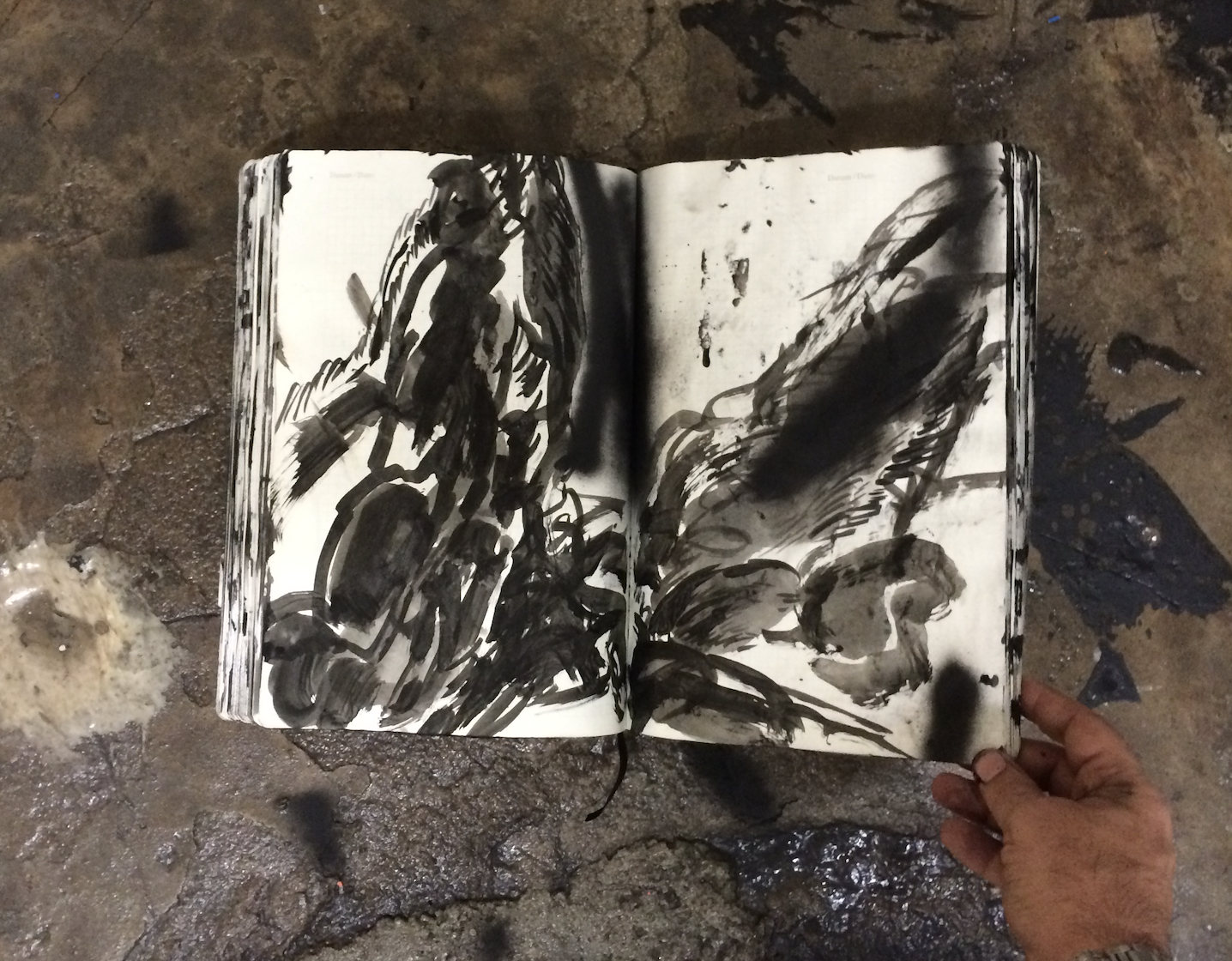
The moment an artwork enters documentation is often mischaracterized as preparatory or administrative. A working proof is reviewed, a notation added, a signature authorizes a state of completion, and a document records the work under a title and date. This activity is commonly described as “behind the scenes,” yet it is precisely the moment the artwork becomes historically real. Without documentation, a work exists only as private expression; with documentation, it becomes legible within the cultural record and capable of attribution, verification, and long-term study.
Archives are frequently understood as neutral repositories that preserve cultural material after meaning has already been established. In practice, archives are active systems that produce the evidentiary conditions under which history can be known. Every archive determines what qualifies as evidence, what can be attributed, what can be verified, and what can be transmitted forward as cultural knowledge. The archive does not follow the artwork; it constitutes the artwork’s historical existence.
To recognize the archive as a productive system is to acknowledge archival authorship: the role documentation plays in shaping attribution, provenance, and interpretive continuity over time. Decisions regarding selection, description, classification, timing, access, and custodianship are not neutral; they establish future evidentiary boundaries. When materials are documented, omitted, or deferred, those actions shape the historical record as decisively as creative production itself.
Finished works communicate experience, while process materials communicate causality. Working proofs, annotations, test impressions, correspondence, and authorization records establish sequence, intent, and origin, often carrying greater evidentiary authority than the finished object alone. When process material is discarded or undocumented, interpretation becomes unmoored from evidence, leaving attribution vulnerable to distortion and historical continuity fragile.
Institutions often describe archival practice as objective or administrative, obscuring the reality that documentation is an act of governance. Neutral archives do not exist; only undocumented decisions do. Silence, delay, and non-acquisition are not absences of action but forms of authorship whose effects become visible over time. Omission shapes the cultural record as powerfully as inclusion.
Custodial institutions exist to stabilize cultural memory across time, independent of market cycles, attention economies, or individual participation. Their function is not to amplify visibility but to preserve the conditions under which meaning can be verified. The Erik Brunetti Foundation for the Arts operates as a custodial system dedicated to evidentiary integrity, provenance continuity, and long-term cultural legibility.
To treat the archive as the artwork is to acknowledge that creative production alone is insufficient to secure cultural survival. Art persists through evidence—through documentation, attribution, provenance, and custodianship that allow meaning to endure beyond the present moment. Absent evidentiary documentation, even the most consequential work remains historically indeterminate.
This article supports the Erik Brunetti Foundation for the Arts’ research and governance framework by articulating principles of archival custodianship, evidentiary integrity, and long-term attribution.
Disclosure: The author holds a governance role within the Erik Brunetti Foundation for the Arts. This disclosure is provided in accordance with standard transparency practices where institutional affiliation is relevant.
APA (7th edition)
Editorial Staff. (2026, February 9). The archive is the artwork—Cultural record governance and the production of evidence. Erik Brunetti Foundation for the Arts Journal. Erik Brunetti Foundation for the Arts.
Chicago (Notes and Bibliography)
Editorial Staff. “The Archive Is the Artwork—Cultural Record Governance and the Production of Evidence.” Erik Brunetti Foundation for the Arts Journal, February 9, 2026. Erik Brunetti Foundation for the Arts.