Preserving Cultural Coherence in the Age of Synthetic Reality—On Symbolic Fragmentation, Continuity & the Conditions of Meaning
Contemporary culture operates through interlocking systems of financialization, algorithmic distribution, institutional signaling, media acceleration, and symbolic circulation. These forces shape not only what gains visibility but the very texture of perception itself.
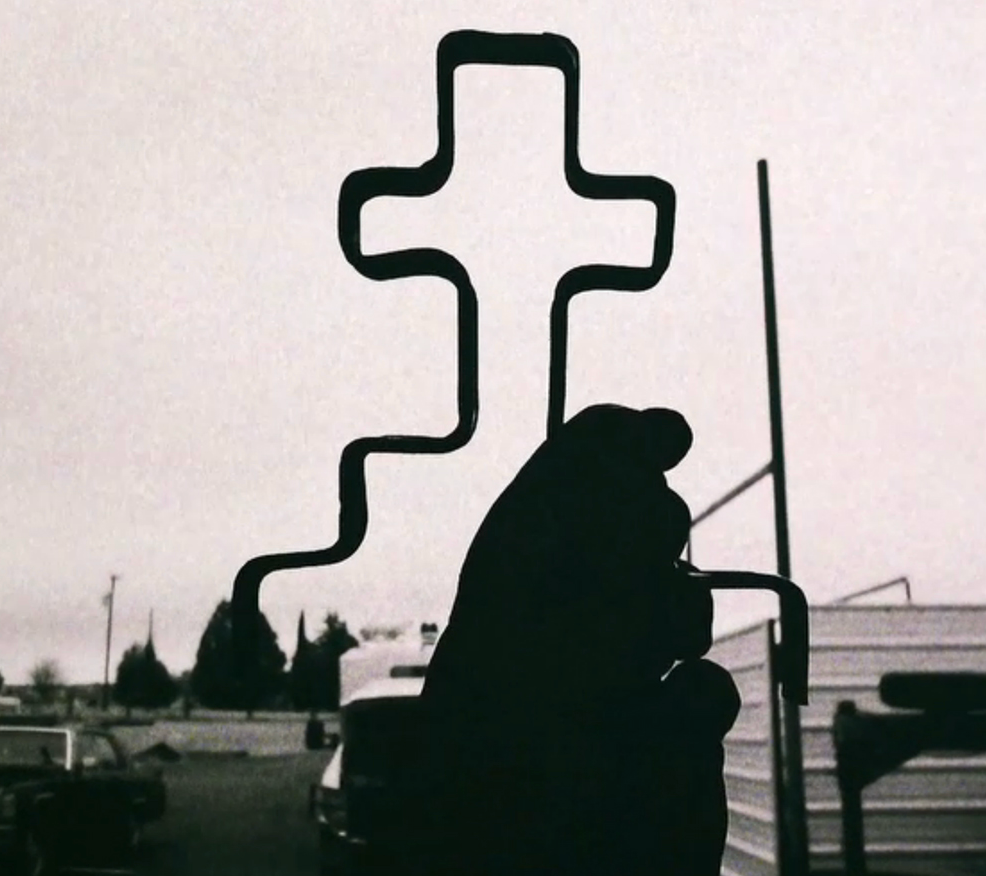
Increasingly, culture drifts from lived continuity. It reorganizes around velocity, repetition, and perpetual turnover. The distinction between work of genuine weight and work that merely circulates with amplified intensity grows increasingly difficult to sustain.
This shift reaches far beyond aesthetics. Modern civilization no longer simply produces culture; it engineers immersive symbolic environments that reorganize attention, emotion, identity, memory, and social orientation at industrial scale. Human beings now inhabit systems of mediated representation moving faster than reflection itself. Images, narratives, ideologies, financial signals, and manufactured stimuli circulate with such density that perceptual stability becomes difficult to maintain.
The result is symbolic fragmentation.
This term does not describe mere disagreement or aesthetic pluralism—conditions familiar to every era. Symbolic fragmentation emerges when the relationship between meaning and representation itself begins to destabilize. Symbols lose their function as durable carriers of shared orientation. They detach from memory, continuity, and lived reality. Culture consequently shifts away from depth toward circulation, from coherence toward adaptability, and from permanence toward strategic visibility.
Beauty becomes increasingly subordinate to novelty, circulation pressure, and ideological utility. Authorship shifts toward symbolic positioning calibrated for external visibility systems. Identity grows modular and performative, subject to continuous revision according to external validation. Meaning detaches from continuity and reorganizes around acceleration.
The consequences extend beyond the cultural sphere. They are civilizational.
Human consciousness organizes symbolically. Stable societies depend upon durable relationships among language, memory, ritual, history, and shared perceptual reference. When these structures erode at sufficient scale, fragmentation reproduces itself across social, political, economic, and psychological domains simultaneously. A civilization gradually loses confidence not only in its institutions but in perception itself.
This dynamic explains the peculiar contemporary condition: hyperconnected yet profoundly disoriented. The issue is not scarcity of information—modern systems generate it in excess. The deeper issue is symbolic density. Much of what circulates today lacks the internal coherence required to stabilize attention or orient judgment, because dominant visibility systems reward stimulation, escalation, emotional volatility, and perpetual narrative turnover over sustained contemplation.
Under such pressures, the nervous system struggles to distinguish the urgent from the meaningful. Tragedy, entertainment, advertising, ideology, financial speculation, political theater, psychological manipulation, and art increasingly collapse into unified streams of accelerated consumption. As symbolic hierarchy weakens, attention fragments. Populations become increasingly susceptible to redirection—economically, culturally, psychologically, and politically—because stable reference points dissolve.
The result is not liberation but exhaustion.
Modern systems increasingly convert reality into symbolic performance. The self becomes continuously mediated through images, metrics, narratives, and external validation loops. Under these conditions, appearance begins overtaking substance because visibility scales faster than depth.
The danger is not commerce or technology themselves, but the gradual erosion of direct contact with reality. People begin relating less to things themselves and more to representations of things: the image of wisdom rather than wisdom, the image of intimacy rather than intimacy, the image of meaning rather than meaning.
This produces a peculiar form of exhaustion—not merely physical fatigue, but existential disorientation. People become surrounded by stimulation yet deprived of nourishment; hyperconnected yet internally isolated; increasingly expressive yet uncertain who they are beneath performance.
Yet certain forms of authorship continue to resist complete absorption into this logic.
The distinction has little to do with commercial success itself. Some highly visible artists maintain coherent bodies of work across decades. Some obscure practitioners possess none. The decisive factor remains continuity: whether a practice reflects sustained internal coherence across philosophical, formal, psychological, and existential dimensions, or whether it functions primarily as adaptive symbolic production calibrated for external systems.
People continue to recognize this distinction instinctively. They respond to symbolic density, to conviction carried through time, to work bearing the imprint of genuine authorship rather than strategic fabrication. Coherence stabilizes perception. It interrupts the disposability that defines so much accelerated culture and restores the possibility of contemplation, proportion, and orientation.
This may explain why increasing numbers of collectors, viewers, and younger cultural participants find themselves drawn toward permanence, craftsmanship, historical grounding, and artists whose practices demonstrate unusual consistency across decades. Such impulses are often dismissed as nostalgia. In reality, they reflect something more structural: fragmentation eventually produces a hunger for coherence.
The issue is not a fantasy of returning to some mythologized premodern purity. Financial power, spectacle, propaganda, and institutional influence have existed throughout history. The deeper question concerns whether a civilization retains sufficient symbolic integrity for human beings to remain anchored in reality rather than dissolved within synthetic circulation.
Here preservation assumes significance beyond simple archiving.
To safeguard coherent cultural work amid accelerated symbolic instability constitutes a form of civilizational memory work. It preserves continuity where fragmentation increasingly dominates. Serious institutions therefore carry responsibilities that extend beyond amplification, branding, and market validation. They must protect the conditions under which discernment, contemplation, perceptual stability, and cultural continuity remain possible.
This includes defending bodies of work that exhibit stable authorship across decades of institutional, technological, aesthetic, and commercial volatility. It requires resisting the flattening pressures of accelerated symbolic systems. More fundamentally, it means preserving culture’s capacity to function as a stabilizing force rather than merely another mechanism of psychological acceleration.
Civilizations do not collapse through economic failure alone.
They also collapse perceptually—when populations lose confidence in the relationship between reality and representation, when symbols cease carrying durable meaning, when attention becomes permanently subordinated to artificial velocity and continuous stimulation. In such conditions, coherence itself acquires a quiet radicalism. Not ideological rigidity. Not aesthetic purism. Not nostalgia for vanished systems. Simply the capacity to remain internally aligned inside environments designed to fragment attention without respite.
The preservation of that alignment may ultimately become one of the central cultural tasks of the twenty-first century.
Published by the Erik Brunetti Foundation for the Arts as part of its ongoing archival and research initiative examining authorship, symbolic systems, and cultural continuity within contemporary media conditions.